

Gambling is often described as a modern vice, yet history suggests otherwise. Long before neon-lit casinos and digital gaming platforms, societies across Asia, Europe, and the Americas developed systems of chance that reflected their economic realities, cultural values, and political ambitions.
Games such as Mahjong, state lotteries like Toto Togel, and the mechanical ancestors of the modern Slot machine are not isolated phenomena, but chapters in a long and interconnected story about risk, probability, and human behavior.
Understanding the historical development of gambling requires moving beyond stereotypes of excess and addiction. Instead, gambling can be examined as a social institution—one shaped by governments, communities, and technological change.
Early Gambling and the Origins of Organized Chance
Archaeological evidence suggests that gambling predates written history. Dice made from bones have been discovered in Mesopotamia, while ancient Indian texts describe wagering on animal fights and board games. In ancient Rome, betting was widespread despite frequent legal prohibitions, and games of chance flourished during festivals and military campaigns.
What distinguished early gambling was its close relationship with authority. Rulers often tolerated or regulated games of chance when they served fiscal or political purposes, while condemning them when they threatened public order. This pattern would repeat itself across centuries and continents.
Lotteries and the Roots of Toto Togel
One of the most enduring forms of organized gambling is the lottery. In ancient China, lottery-like systems were used as early as the Han Dynasty, where numbered tickets helped raise funds for large-scale public projects. These early mechanisms laid the foundation for what would later evolve into modern lottery systems.
In Southeast Asia, particularly Indonesia and surrounding regions, lottery-style gambling developed under both colonial and post-colonial administrations. The term Toto Togel, derived from words meaning “guessing numbers,” reflects a localized adaptation of global lottery traditions. While often associated today with informal or underground betting, Toto Togel historically mirrors the broader lottery concept: small individual wagers pooled into large collective prizes.
Globally, lotteries have served paradoxical roles. In Europe during the Renaissance, they financed infrastructure and social welfare. In colonial America, they helped build roads, ports, and educational institutions. Yet lotteries were also criticized for exploiting the poor, leading to bans in the 19th century before their regulated return in the modern era.
Toto Togel, viewed through this historical lens, is not an anomaly but part of a long lineage of numerical gambling systems shaped by local culture, economic conditions, and regulatory environments.
Mahjong: From Elite Pastime to Gambling Icon
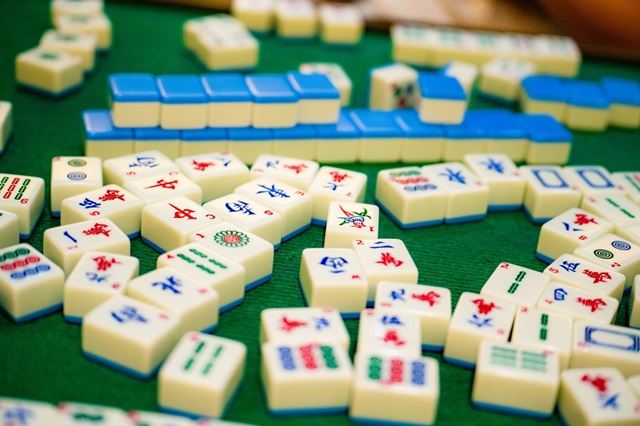
Few games illustrate the cultural dimension of gambling as clearly as Mahjong. Originating in China during the late Qing Dynasty, Mahjong evolved from earlier card and tile games enjoyed by aristocrats and scholars. By the late 19th century, it had spread widely across Chinese society, becoming a staple of family gatherings, social clubs, and community events.
Unlike many Western gambling games, Slot Mahjong is deeply social and strategic. While wagering has long accompanied the game, the stakes were traditionally symbolic or modest, reinforcing social bonds rather than individual profit. Mahjong tables functioned as spaces for conversation, negotiation, and shared identity.
The game’s international spread followed patterns of migration and trade. In the early 20th century, Mahjong briefly captivated Western audiences, marketed as an exotic intellectual pursuit. Over time, its association with gambling became more pronounced in regions such as Hong Kong and Macau, where Mahjong halls and casino adaptations emerged.
In modern casinos, particularly in East Asia, Mahjong has been digitized and integrated into electronic gaming formats. This transformation reflects a broader trend: traditional games being reshaped to fit commercial gambling environments, often at the cost of their original social context.
Slot Machines and the Industrialization of Gambling
If Mahjong represents tradition, the Slot machine represents modernity. Invented in the United States in the late 19th century, early slot machines were mechanical devices with spinning reels and simple symbols. Their appeal lay in their accessibility: no skill, no dealer, and minimal rules.
As technology advanced, slot machines evolved rapidly. Electromechanical systems in the mid-20th century increased payout complexity, while digital technology later introduced video slots, progressive jackpots, and algorithm-driven outcomes. By the late 20th century, Slot machines had become the primary revenue source for casinos worldwide.
More than any other gambling format, slots transformed the casino into a space of individual consumption. Players no longer needed social interaction or strategic thinking. Gambling became solitary, continuous, and technologically mediated—a shift that raised new concerns about regulation and behavioral impact.
Convergence in the Modern Casino Era
Today’s global gambling industry represents a convergence of historical traditions. Numerical betting systems like Toto Togel coexist alongside digital Slot platforms. Mahjong, once played on wooden tables in private homes, appears on casino floors and online interfaces.
Governments now play a central role in shaping this landscape. Regulatory frameworks, licensing systems, and responsible gambling policies reflect an attempt to balance economic benefit with social responsibility. In many countries, gambling revenue supports public services, echoing the ancient role of lotteries as tools of state finance.
Yet the core appeal remains unchanged. Whether drawing tiles in Mahjong, selecting numbers in Toto Togel, or pulling the lever of a Slot machine, players engage with uncertainty—a universal human experience that transcends culture and time.
A Historical Perspective on Chance
Seen historically, gambling is neither purely a vice nor merely entertainment. It is a cultural artifact, shaped by technology, authority, and social values. Mahjong reflects communal identity, Toto Togel illustrates the intersection of chance and public finance, and Slot machines embody industrial efficiency and digital transformation.
Together, they tell a story not just of gambling, but of how societies understand risk, hope, and reward. In that sense, the history of gambling is inseparable from the history of civilization itself—constantly evolving, endlessly contested, and deeply human.